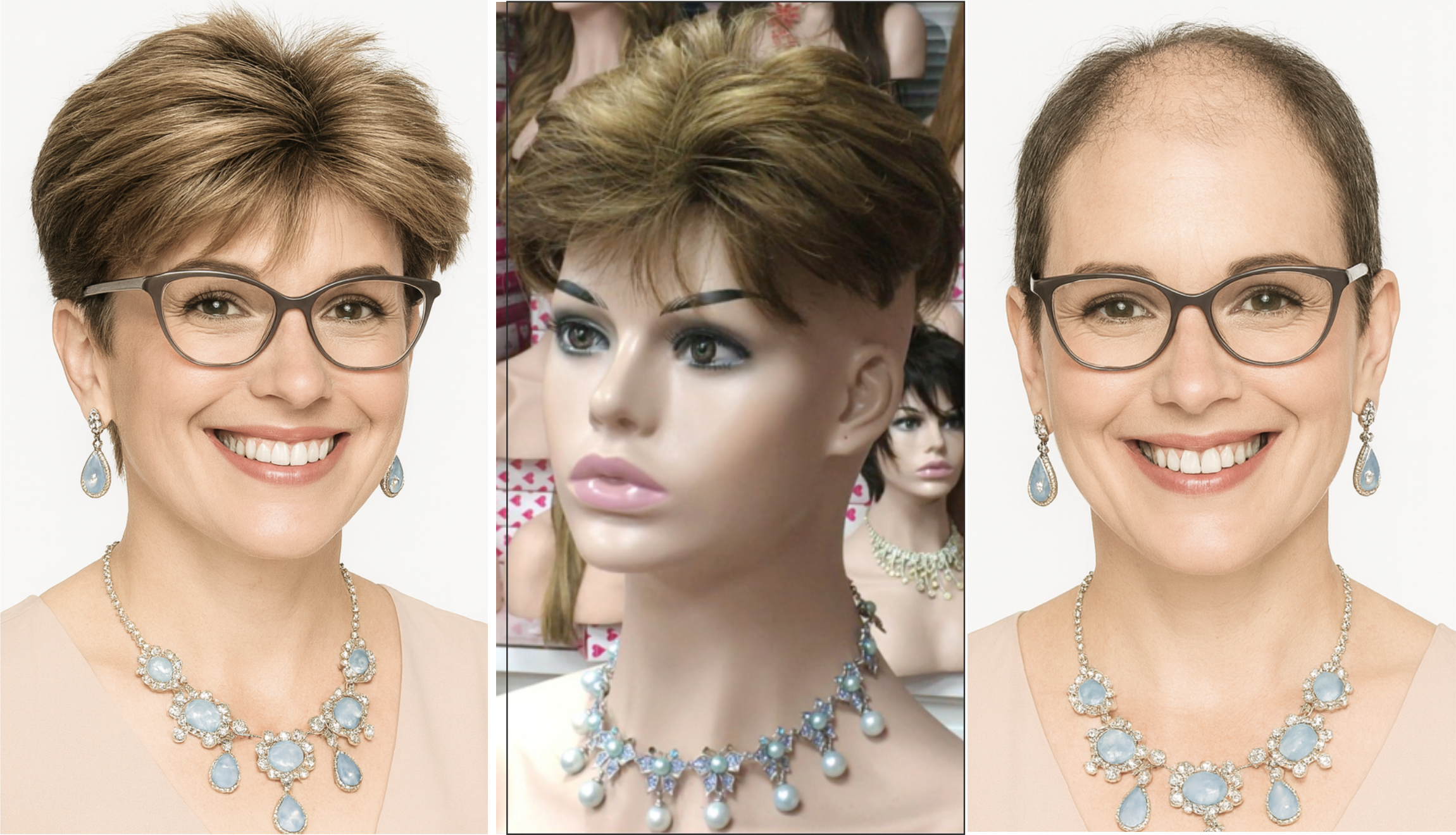
Natural human hair toppers for women with alopecia

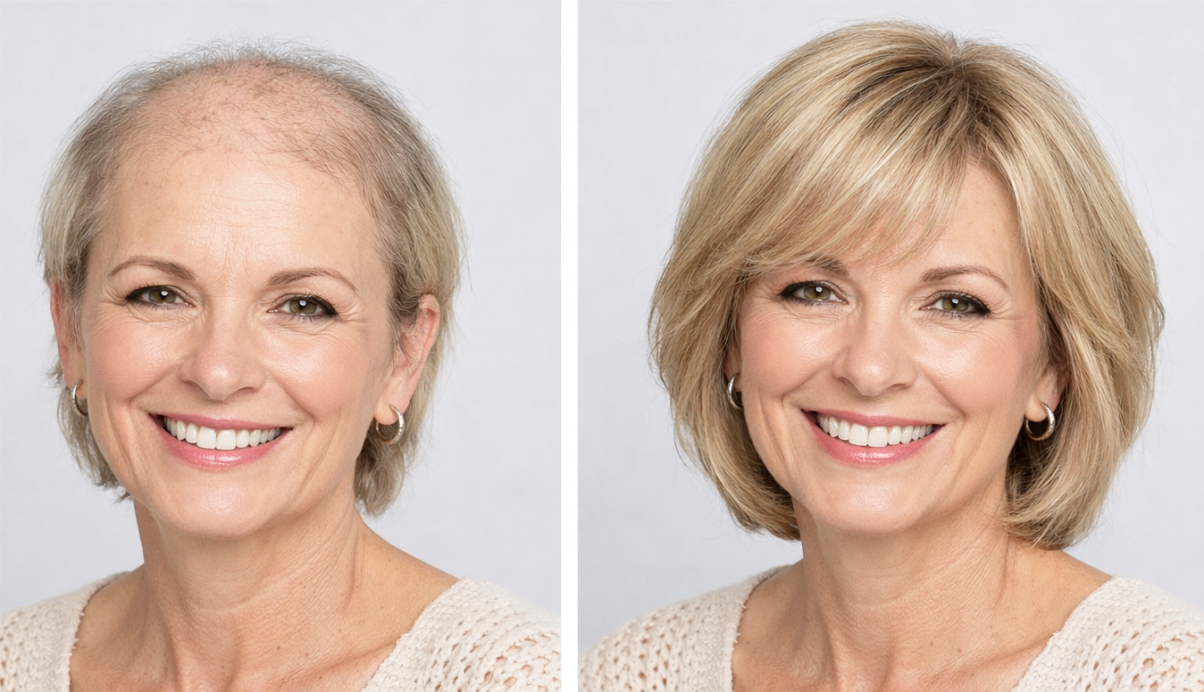
If you still keep part of your own hair, you may not need a full wig: you may need to recover density exactly where it is missing.

Natural hair integrated with your own hair Options for visible parting, frontal area, crown and sides Guided choice by photos, measurements, colour and base
First important decision

Full wig or hair topper: you do not always need to cover the whole head

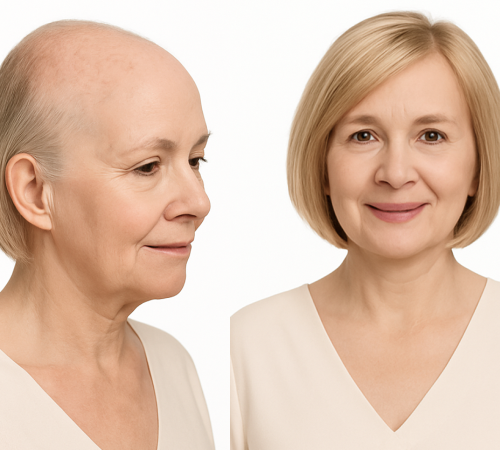
When there is loss of volume but you still keep hair at the back or sides, the best solution is often not a full wig but a natural hair topper.

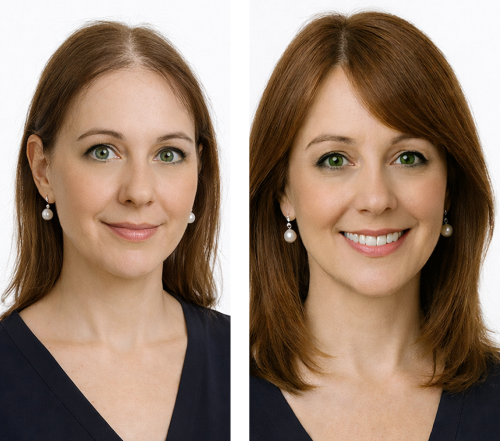
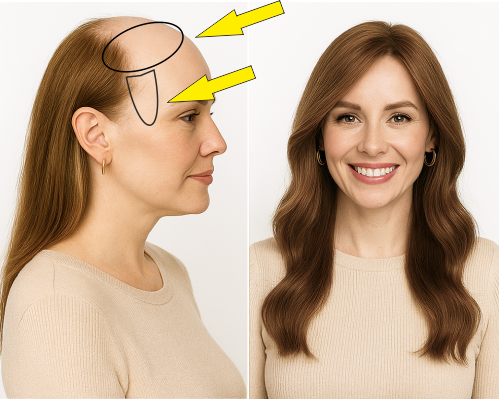
The aim is not to change your image, but to recover density on the top area, parting, frontal area or crown so your hairstyle has presence again.

  • It may work if you notice low density on the top area.
  • It can help when the parting opens too much or the crown looks sparse.
  • It allows your own hair to remain visible and integrated.
  • It avoids the feeling of wearing a full wig when your case does not require one.
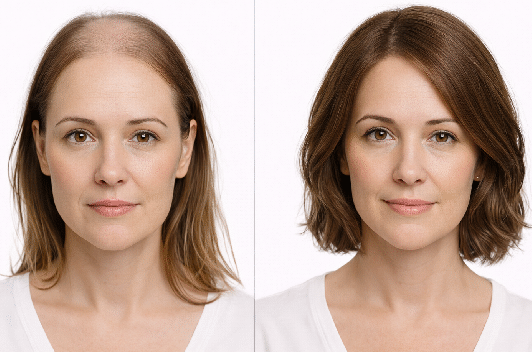
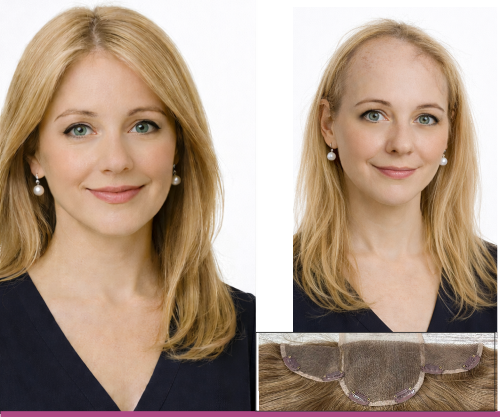
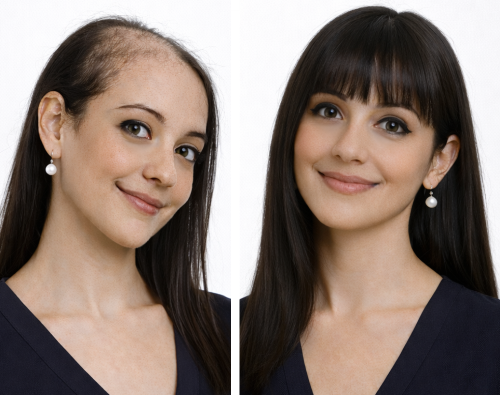
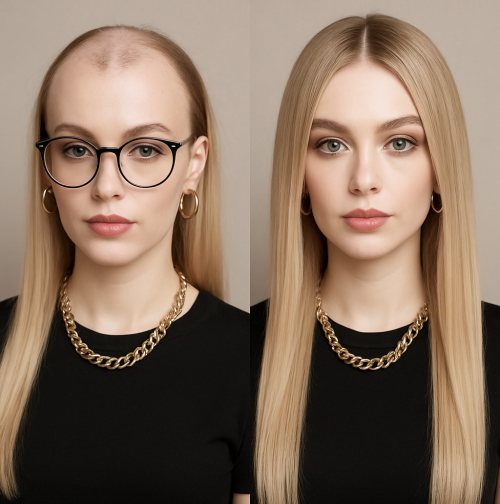
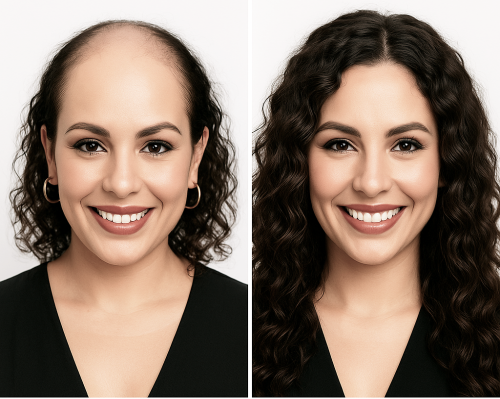
Comparison to assess whether a full wig or a natural hair topper is more suitable

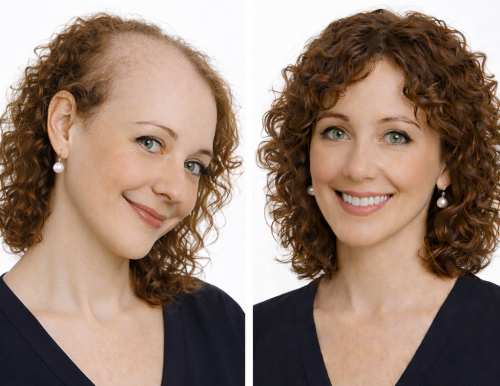
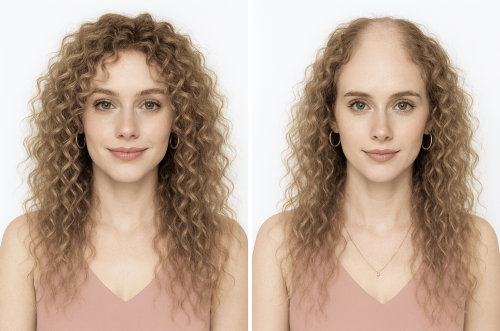
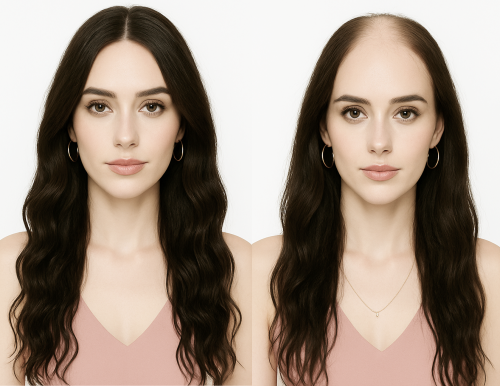
Visual examples to recognise your case

The right topper depends on the area that needs density, how much hair you still have and how you usually style it.
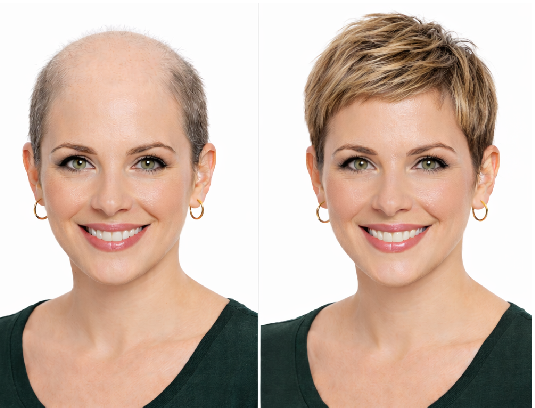
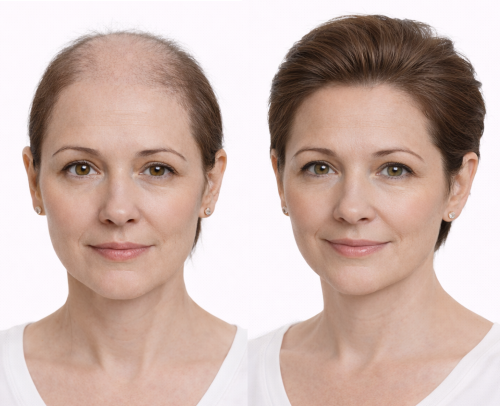
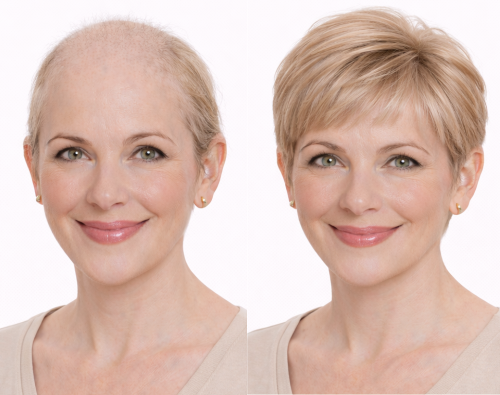
Viewy short hair solution with a skin prosthesis

Pelo muy corto y base skin

When the desired style is very short, looking for longer hair is not always suitable. A skin base can help recover presence with a light, practical cut.

Ideal for someone who wants a clean, comfortable and easy-to-maintain image, without forcing too much volume.
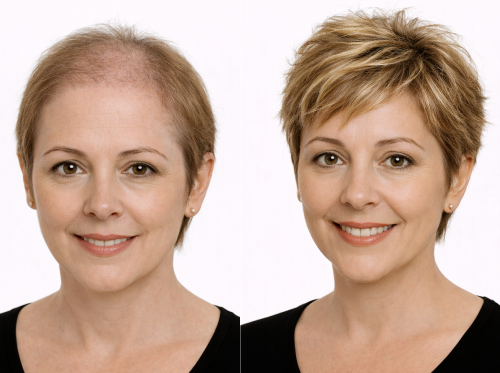
Natural hair topper de corte pixie para poca densidad

Corte pixie para recuperar densidad

In short styles, a well-adapted piece can restore the shape of the hairstyle without becoming a full wig.

The key is choosing moderate density, compatible colour and a cut that looks like your own.
Natural hair topper corto castano para base superior

Corto castano con base superior

When hair loss is concentrated on top, an upper base can rebuild volume without completely changing the style.

It works best when the sides and nape allow the piece to blend with your own hair.
Natural hair topper corto rubio estilo pixie

Pixie rubio con resultado natural

Un corte corto rubio puede ser una buena opcion cuando se busca ligereza, frescura y una imagen reconocible.

Density should not be excessive: in short hair, too much hair can look less natural.
Natural hair topper corto con mechas para poca densidad

Corto con mechas y movimiento

Highlights can help visually break up density and make the result look lighter and more natural.

Color, reflejos y direccion del peinado son tan importantes como la base.
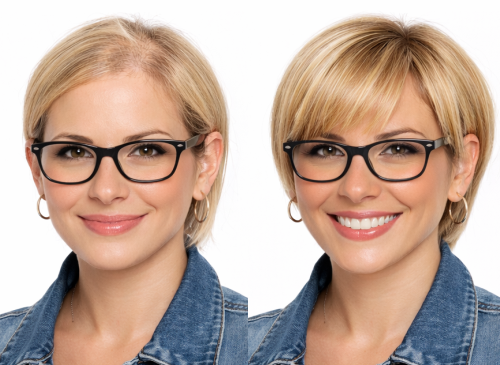
Natural hair topper corto rubio con gafas

Corto rubio con frontal cuidado

En estilos con gafas y rostro despejado, el frontal debe quedar especialmente limpio para no llamar la atencion.

Una pieza bien elegida ayuda a recuperar volumen sin endurecer el gesto ni cambiar la identidad.
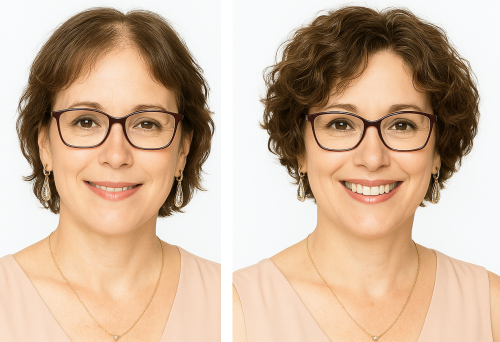
Natural hair topper corto rizado con gafas

Corto rizado con poca densidad frontal

El rizo corto puede aportar cuerpo de forma muy natural cuando la pieza respeta el volumen del rostro y la textura habitual.

En cabello rizado, acertar con patron, brillo y densidad evita que la pieza se vea aparte.
Natural hair topper bob rubio para senora mayor

Bob rubio clasico y favorecedor

A medium-volume bob can be a very natural solution when the aim is to recover presence without moving to long hair.

La caida lateral y el flequillo suave ayudan a disimular zonas claras sin exceso de cabello.
Natural hair topper bob rubio para alopecia extensa

Blonde bob for wider hair loss

When the sparse area is larger, it is worth assessing a more complete base and enough density so the hairstyle does not open up.

If your own hair does not provide support, we may move towards a half wig or a more enveloping piece.
Natural hair topper media melena castana para raya superior

Medium-length brown hair with a natural parting

For many women, the aim is not to change the cut, but to recover the parting and volume the hair had before.

The parting, brown tone and upper density must suit the usual hairstyle.
Natural hair topper para alopecia cicatrizante lateral con melena

Laterales, frontal y zonas cicatrizantes

When hair loss affects sides or specific areas, the shape of the base matters more than total volume.

In these cases, sideburns, front, lace and attachment system are studied before choosing a model.
Natural hair topper base de tul rubio media melena

Lace base for medium-length blonde hair

Lace helps when naturalness is needed in visible areas and a soft transition with your own hair.

The base should cover what is needed without being larger or heavier than advisable.
Natural hair topper largo negro con flequillo frontal

Black hair with frontal fringe

El flequillo puede ser una buena ayuda cuando hay que proteger visualmente el frontal o reconstruir una linea de nacimiento.

In dark hair, shine and density must be controlled very carefully because any difference is more noticeable.
Natural hair topper melena larga rubia con raya central

Long blonde hair with centre parting

When the aim is to keep long hair, the centre parting and hair fall must be very well resolved.

No se trata solo de largo: la base debe sostener el peinado sin abrirse en la zona superior.
Natural hair topper base grande con melena rizada morena

Large base with curly hair

With abundant curls, a wide base can restore density and continuity when loss is visible on the top area.

La integracion depende del rizo, la cantidad de cabello y el volumen lateral.
Natural hair topper rizo cobrizo con frontal y patillas

Copper curl with front and sideburns

When curls frame the face, the front, temples and sideburns need a very precise solution to keep naturalness.

El color cobrizo y la forma del rizo obligan a una adaptacion muy cuidada.
Natural hair topper de rizo largo para alopecia difusa

Rizo largo e integracion con cabello propio

In long curly hair, the topper must respect the curl pattern and avoid creating an artificial difference between piece and own hair.

Natural hair allows texture, length and movement to be worked with more flexibility.
Natural hair topper melena larga morena con raya central

Long brunette hair with centre parting

In long dark hair, the centre parting and upper density are decisive so the result does not look like an added piece.

The choice of base, hair direction and density must be made by looking at your real hairstyle.
1 de 18
Back to the top of the page

How we choose a natural hair topper with you

Choosing a hair topper is not about looking at a catalogue and guessing. First we assess the case, then the model.

1

Affected area

Parting, frontal area, crown, sides or the whole top area. The area defines the base.

2

Your own hair

We look at how much hair you still have to decide whether clips, adhesive or a mixed system make sense.

3

Colour and texture

The topper blends with your own hair, so shine, curl, grey hair and tone must match.

4

Base and parting

We choose size, lace, top, parting, front or sideburns according to your usual hairstyle.

5

Final adaptation

Cutting and styling adjust the piece so it becomes part of your everyday image.

Buying remotely, but with a serious assessment of your case
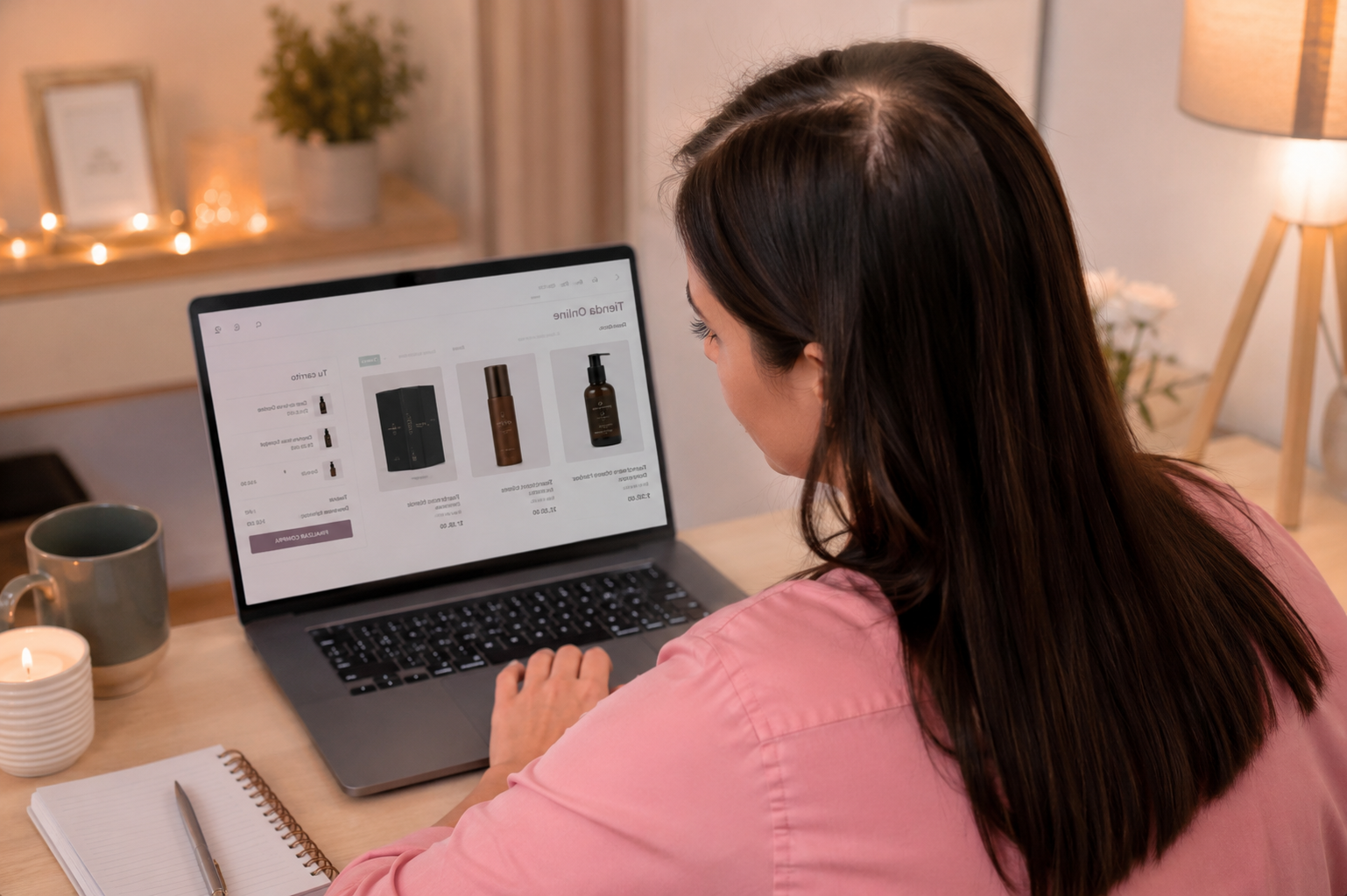
Woman checking online hair solutions for alopecia and natural hair toppers

Many women wonder whether a topper will be noticeable, whether it will move or whether it will look different from their own hair. That is why we ask for useful photos before recommending anything.

A front photo, a photo from above, another of the sparse area and a reference for your usual hairstyle allow us to guide you much more precisely.

Paula is our virtual assistant. Try it.

It helps you organise your first questions about alopecia, toppers, base type, colour and remote purchase before speaking with our team.

  • Initial guidance to know whether you need a topper or a full wig.
  • Private WhatsApp assessment with photos of your case.
  • Choice of base, colour, length and attachment system.
  • Confirmation of timing and adaptation before preparing the order.
Woman checking online hair solutions for alopecia and natural hair toppers

Base types: small, large, frontal, sideburns or lace

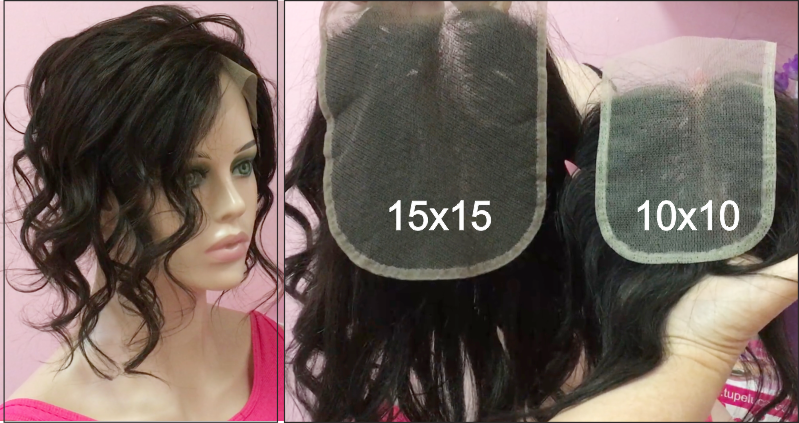
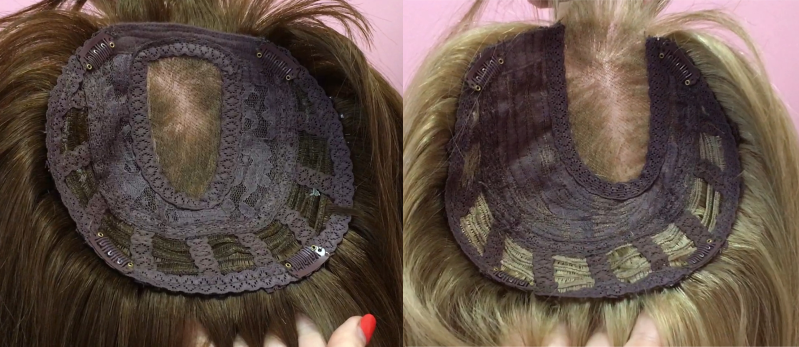
The base is the part that holds the topper hair. Its size and shape must match the area that lacks density, but also the way you style your hair.

In some cases a small base is enough. In others we need to work with the front, sideburns, sides, lace or a larger base so integration is comfortable and natural.

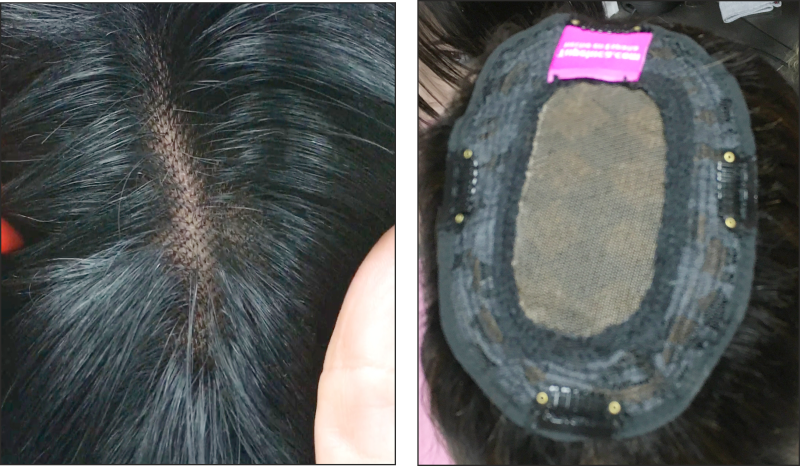
Base 10x10 Base 15x15 Front lace Sideburns Clips Adhesive
Small base de voluminador natural con clips para cabello rizado

Small base con clips

A small base may be enough when the sparse area is localised and there is hair around it to attach with clips.

Light, practical and designed to add density without covering more than necessary.
Base de voluminador natural para raya superior con interior visible

Upper parting and inner side

The parting area requires a base that can simulate scalp and place the hair in the correct direction.

The naturalness of the parting depends on both the material and the hair implantation.
Comparativa de bases de voluminador natural 10x10 y 15x15

Base 10x10 o 15x15

The size is chosen according to the extent of alopecia. A larger base covers more, but it must still remain comfortable.

The largest base does not always win: the right one is the base that covers exactly what your case needs.
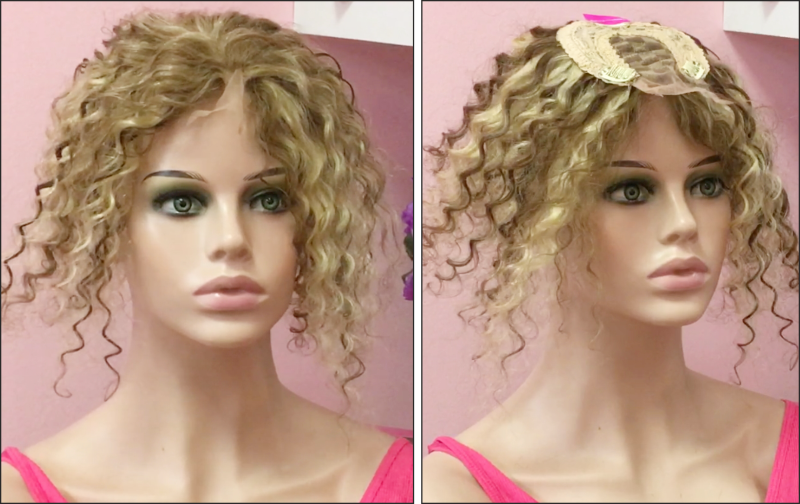
Base frontal de tul para voluminador natural rizado rubio

Front lace en cabello rizado

Front lace helps work visible areas when the hairstyle shows the hairline, temples or front parting.

En rizos, la base debe acompanar la textura para que no se vea una pieza separada.
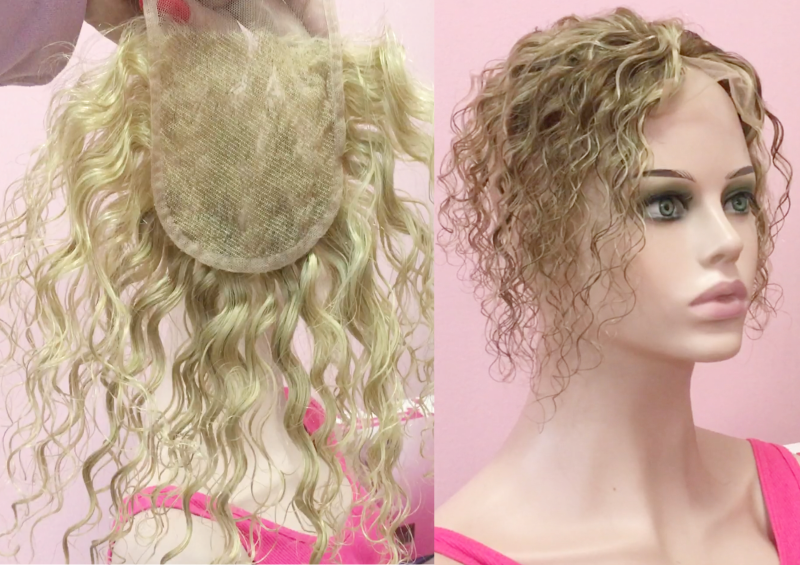
Base de tul para voluminador natural rizado rubio

Breathable lace base

Lace allows a lighter and more flexible base, especially useful when visual naturalness and comfort are needed.

It can be a good option for the parting, frontal area or low upper density.
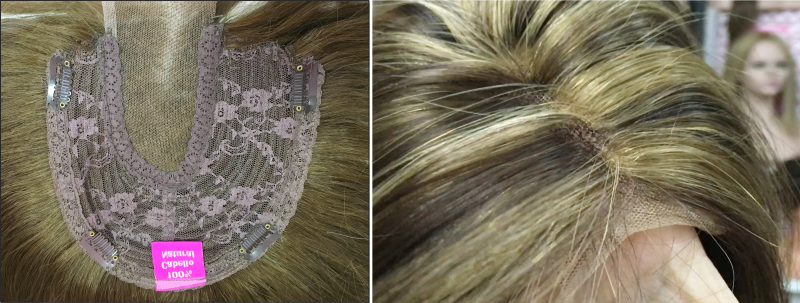
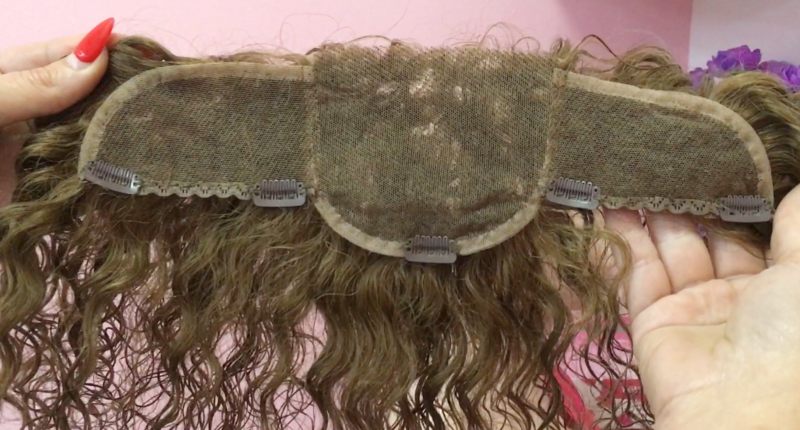
Base frontal con raya de tul y clips para voluminador natural

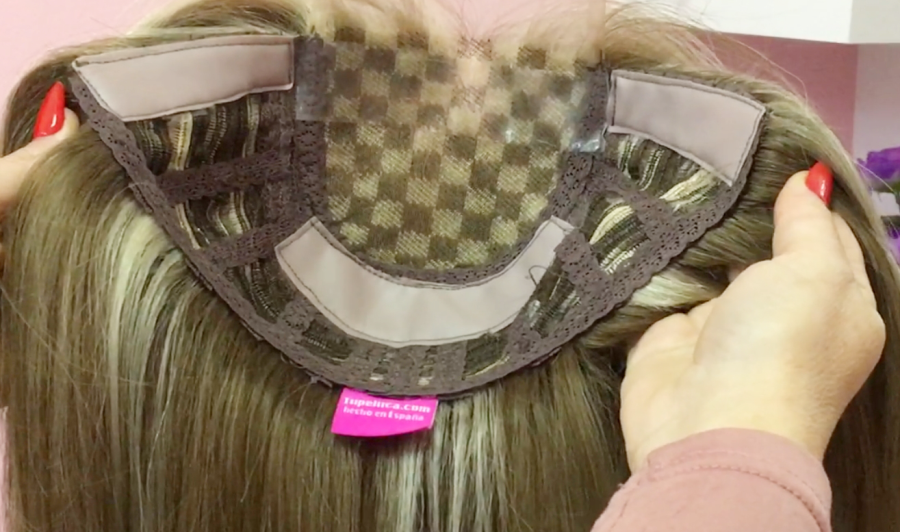
Mixed construction

Some bases combine a partial lace area, for example at the parting, with the rest machine-made to provide structure and comfort.

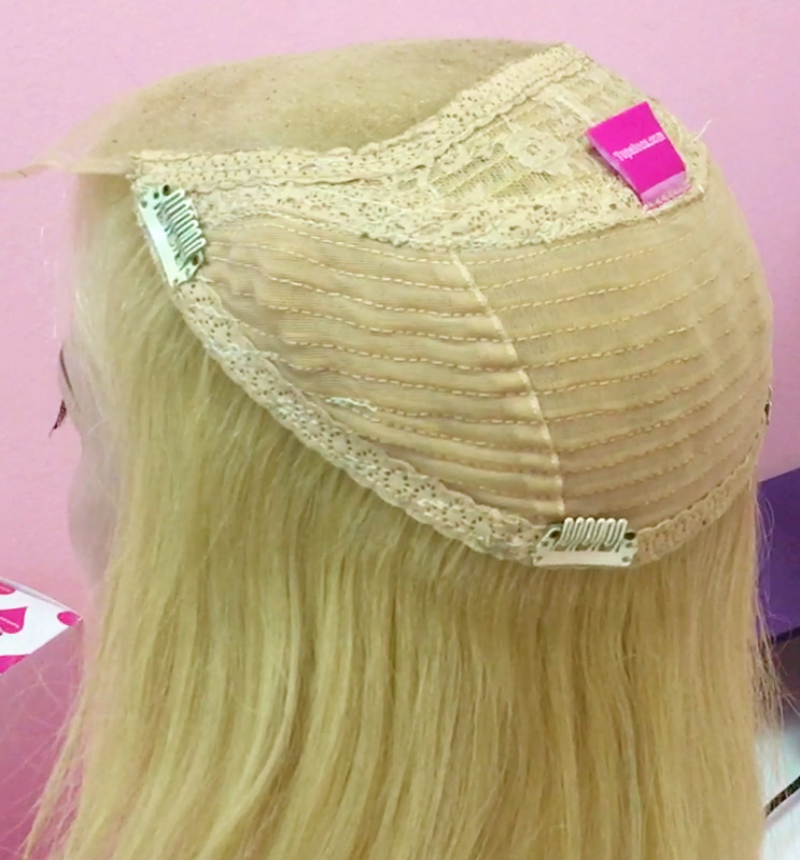
Clips are placed in areas designed to hold securely without stressing weakened hair.
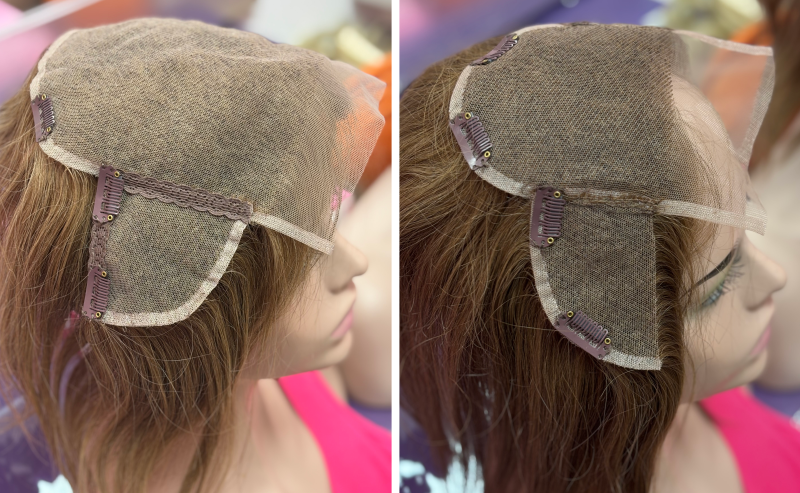
Interior de base frontal con patillas para voluminador natural

Base frontal con patillas

When alopecia affects temples or sides, the base must extend towards the sideburns to cover the real area.

Muy util en casos de alopecia frontal fibrosante o retroceso del arco frontal.
Base extendida de voluminador natural con frontal y patillas

Sideburns extendidas

An extended base allows sides and front to be covered without relying only on volume on the top area.

La forma lateral evita que una pieza superior se quede corta en casos frontales.
Comparativa de base lateral con patillas en voluminador natural

Frontal con patillas: 10x10 o 15x15

The difference between a standard base and a base with extra sideburns can be decisive when hair loss reaches the side.

Por eso pedimos fotos de frente, lateral y parte superior antes de recomendar.
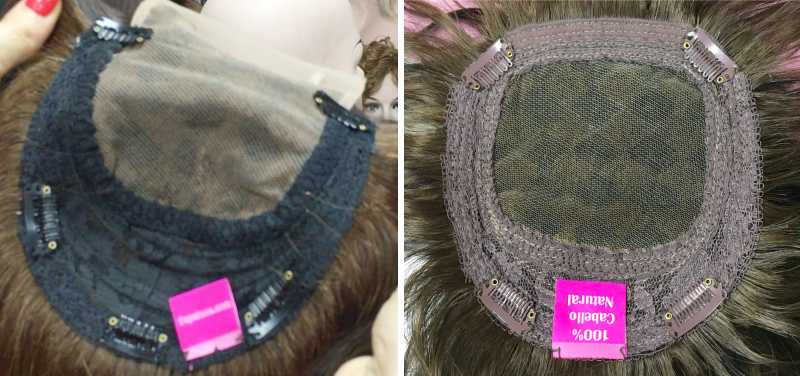
Bases redondas y ovaladas de voluminador natural con clips

Bases redondas u ovaladas

Las bases ovaladas o redondeadas funcionan bien cuando el problema se concentra en coronilla o zona superior.

Su colocacion debe respetar el remolino y la direccion natural del peinado.
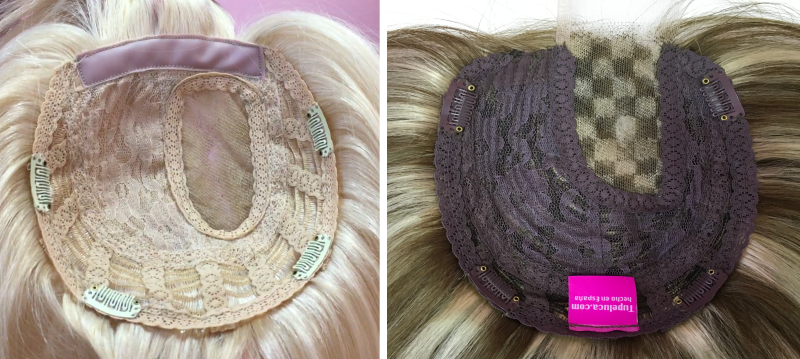
Top de tul con clips para voluminador natural

Lace parting and front according to hairstyle

A parting from the start of the forehead opens the face well. If the parting starts a little further back, the result is usually more breathable and allows a soft fringe to cover part of the forehead.

The parting position is adapted to style, comfort and the real need of each hairstyle.
Base top para raya y coronilla en voluminador natural

Top piece for parting and crown

When the parting and crown are the weak point, the base must cover that area without invading areas where it is not needed.

Choosing the centre of the base well helps the hairstyle fall naturally.
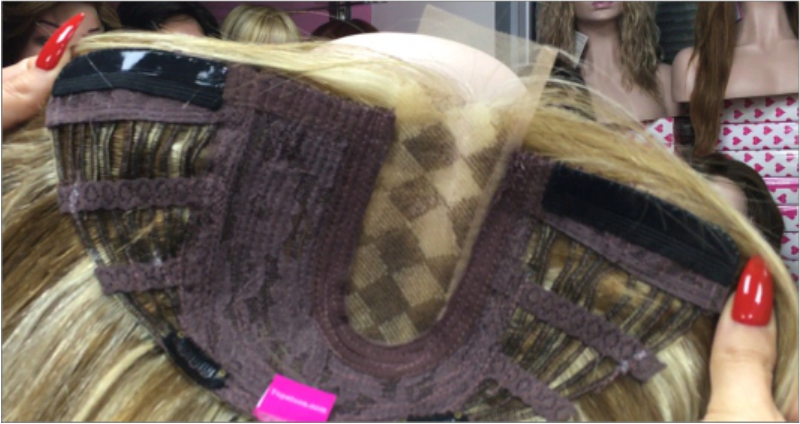
Interior con silicona antideslizante en base de voluminador natural

Interior con zonas antideslizantes

Some constructions include inner areas designed to improve support, stability or comfort.

Attachment can combine clips, inner support and adaptation according to available hair.
Media peluca con malla transpirable y clips

Media peluca transpirable

When a small topper is not enough, a half wig can cover more surface without always becoming a full wig.

It is an option for cases where hair loss goes beyond the top area.
Protesis skin de alta cobertura para perdida extensa de cabello

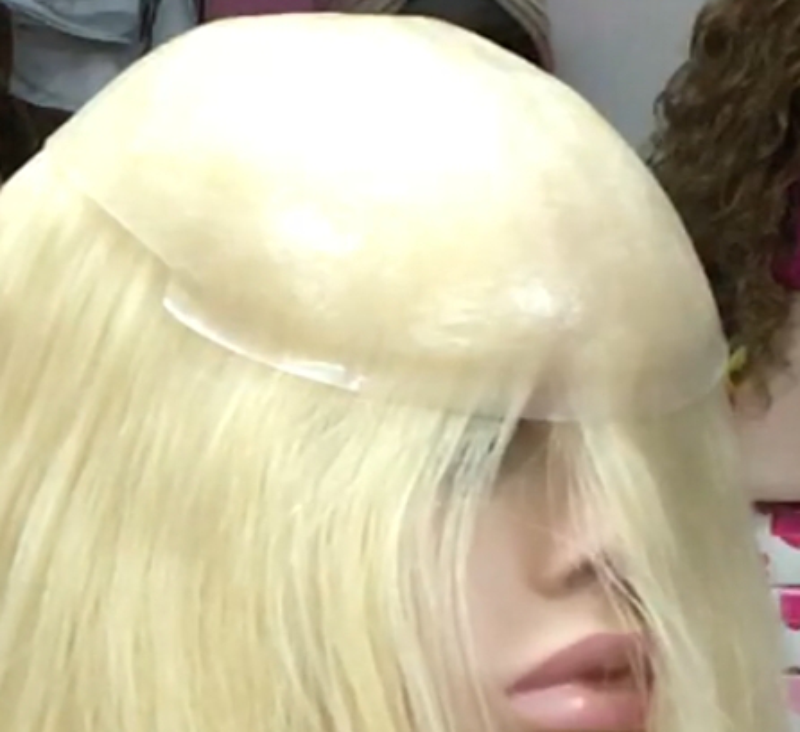
Skin prosthesis for high coverage

In cases of extensive loss, it may make more sense to assess a skin prosthesis than insist on a partial base that is too small.

The choice is made with coverage, security and daily naturalness in mind.
1 de 15

ROCÍO model in straight hair for frontal fibrosing alopecia

Este vídeo muestra una versión en liso del modelo Rocío, pensado como ejemplo visual para casos donde la alopecia fibrosante frontal afecta frontal, sienes o patillas.

It is not an automatic recommendation: first we assess the real area of loss, available hair, base, attachment and the style you want to keep.

Technical details that change the result

These elements may seem small, but they are what make a topper look integrated or perceived as a separate piece.
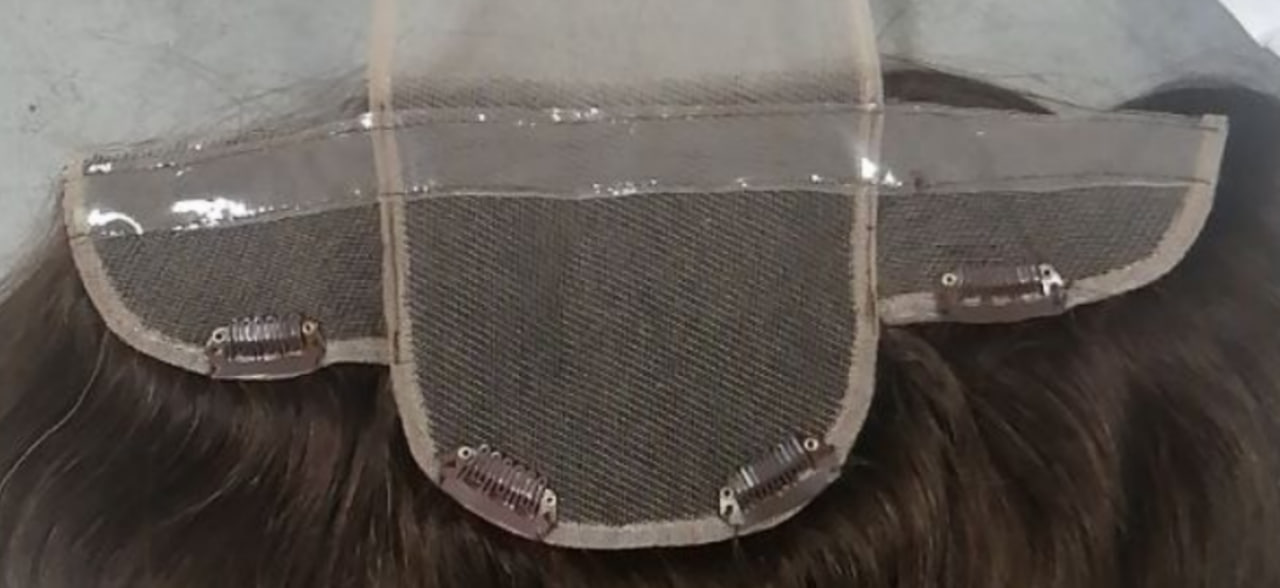
Clips y adhesivo en una base transparente de voluminador natural

Clips or adhesive

If there is enough hair, clips can be comfortable. If not, adhesives or mixed systems are assessed.
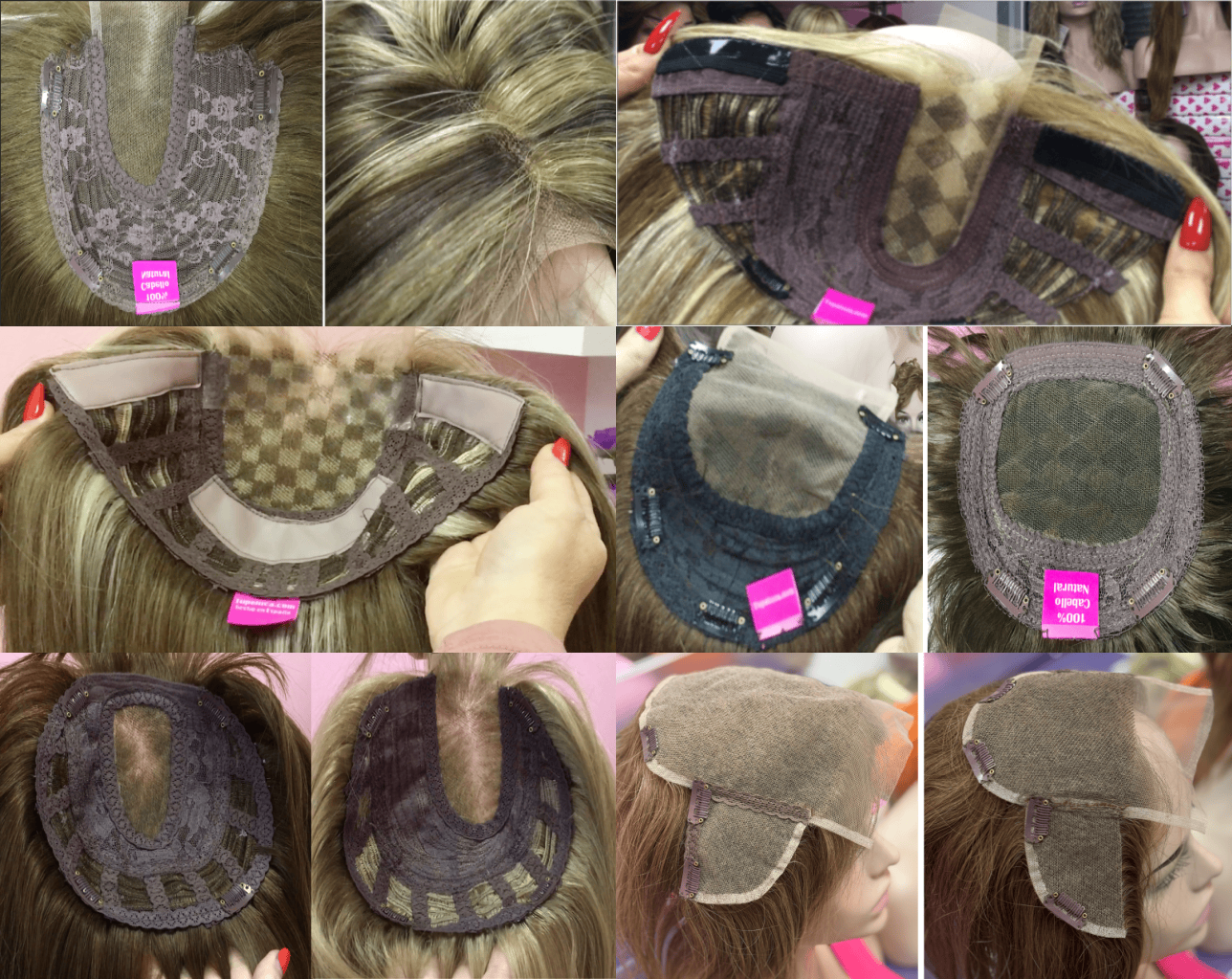
Natural hair topper base and lace parting result

La misma base puede cambiar mucho

El corte final, el peinado y la adaptacion transforman una misma base en resultados muy distintos.
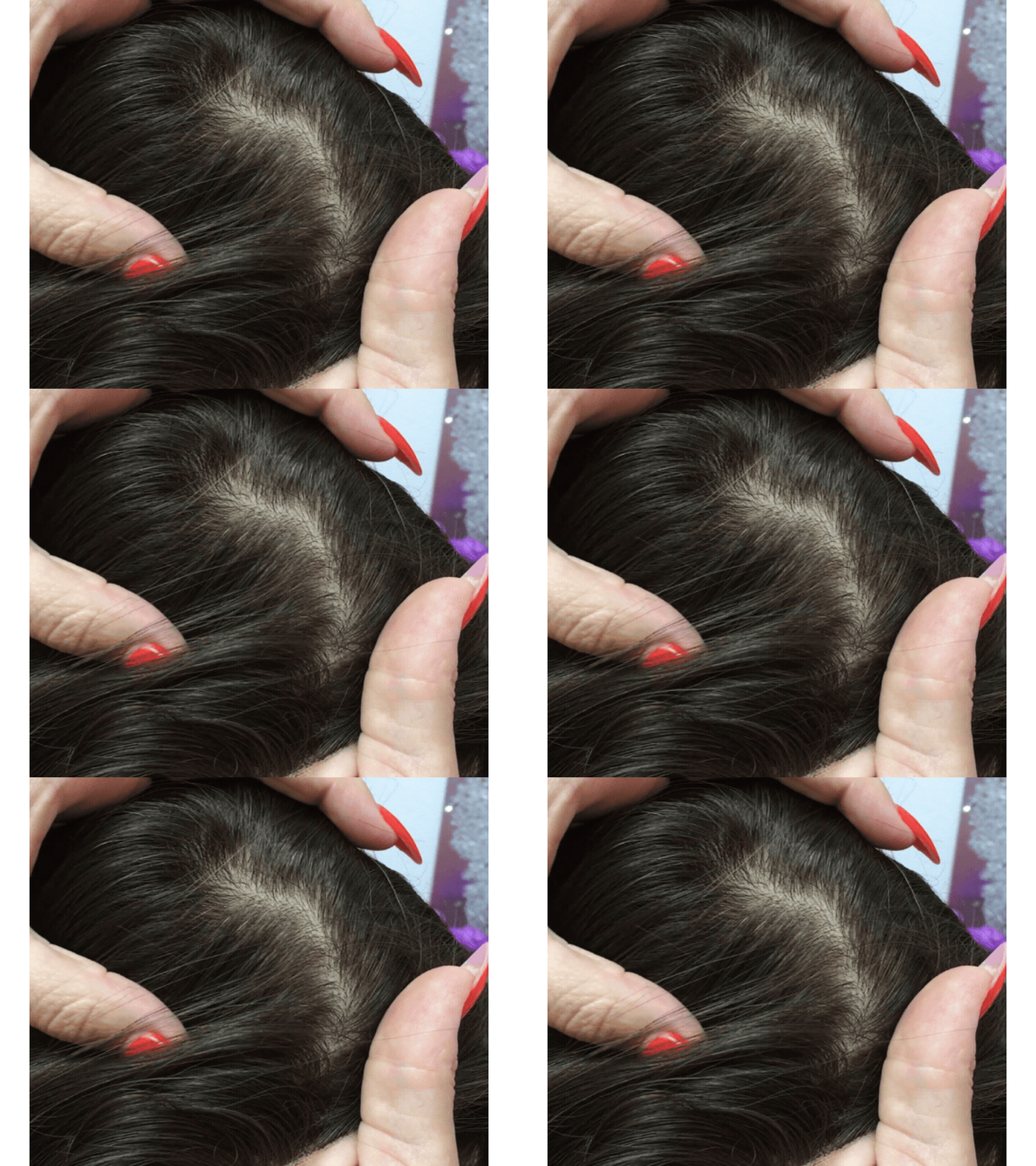
Animacion de tul y raya natural en voluminador de cabello humano

Lace and naturalness

Lace can help in visible areas, especially when the parting, front or transparency must be handled carefully.

Types of alopecia we can assess

This section works as further reading: it does not replace a medical diagnosis, but helps explain why not all hair solutions are the same.
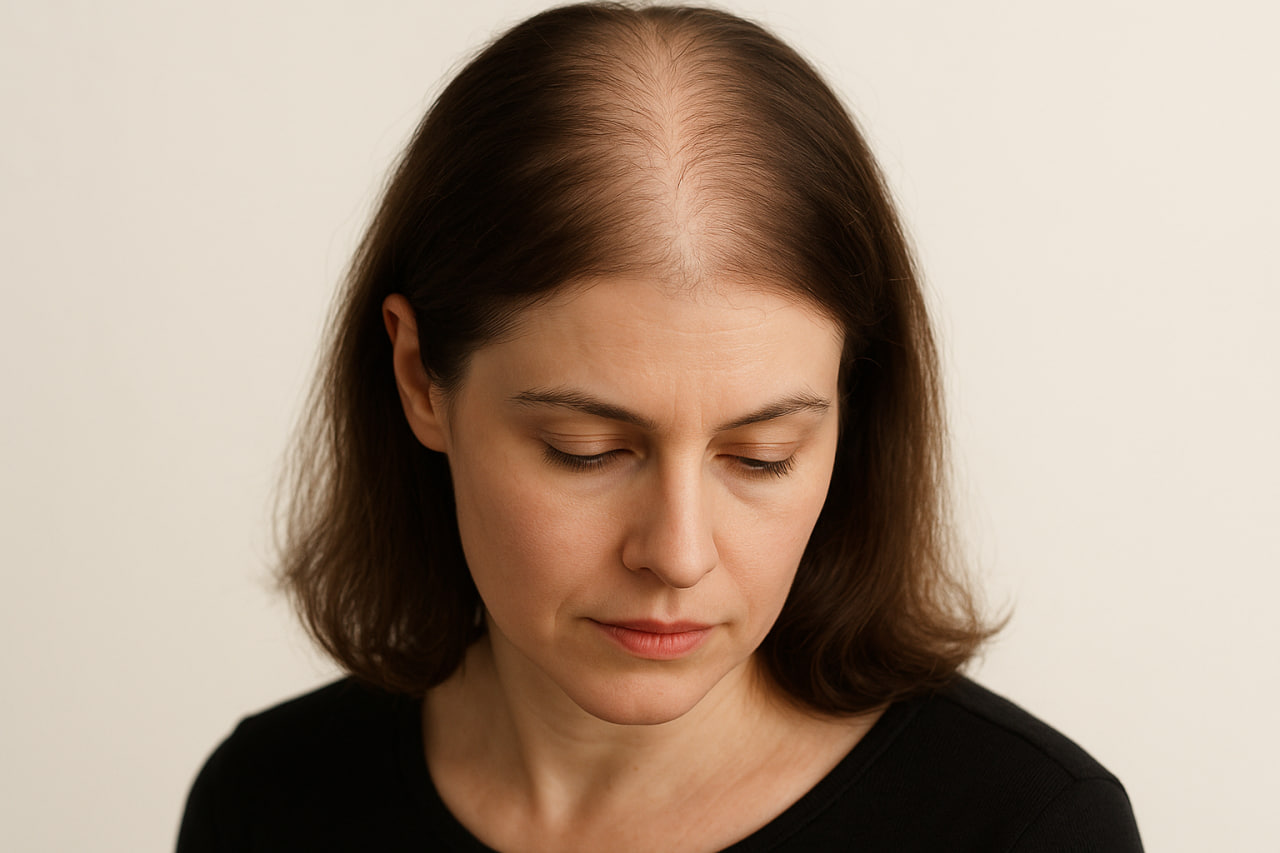
Female androgenetic alopecia con perdida de densidad superior

Female androgenetic alopecia

It usually causes progressive density loss on the top area. It often works with small or medium toppers.

Read more
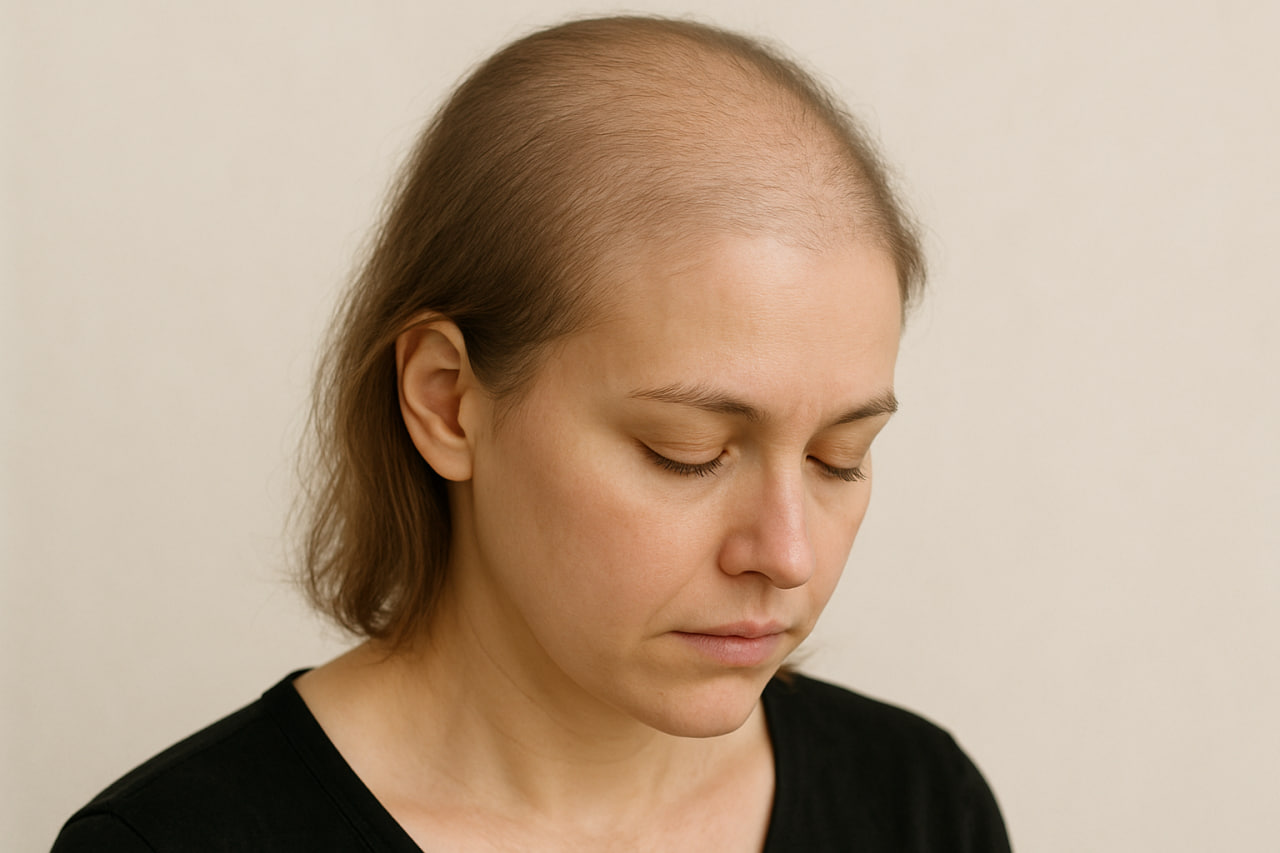
Diffuse alopecia y perdida repartida de densidad capilar

Diffuse alopecia

El cabello pierde cuerpo de forma repartida. Se valora si hay suficiente pelo para integrar una pieza parcial.

Read more
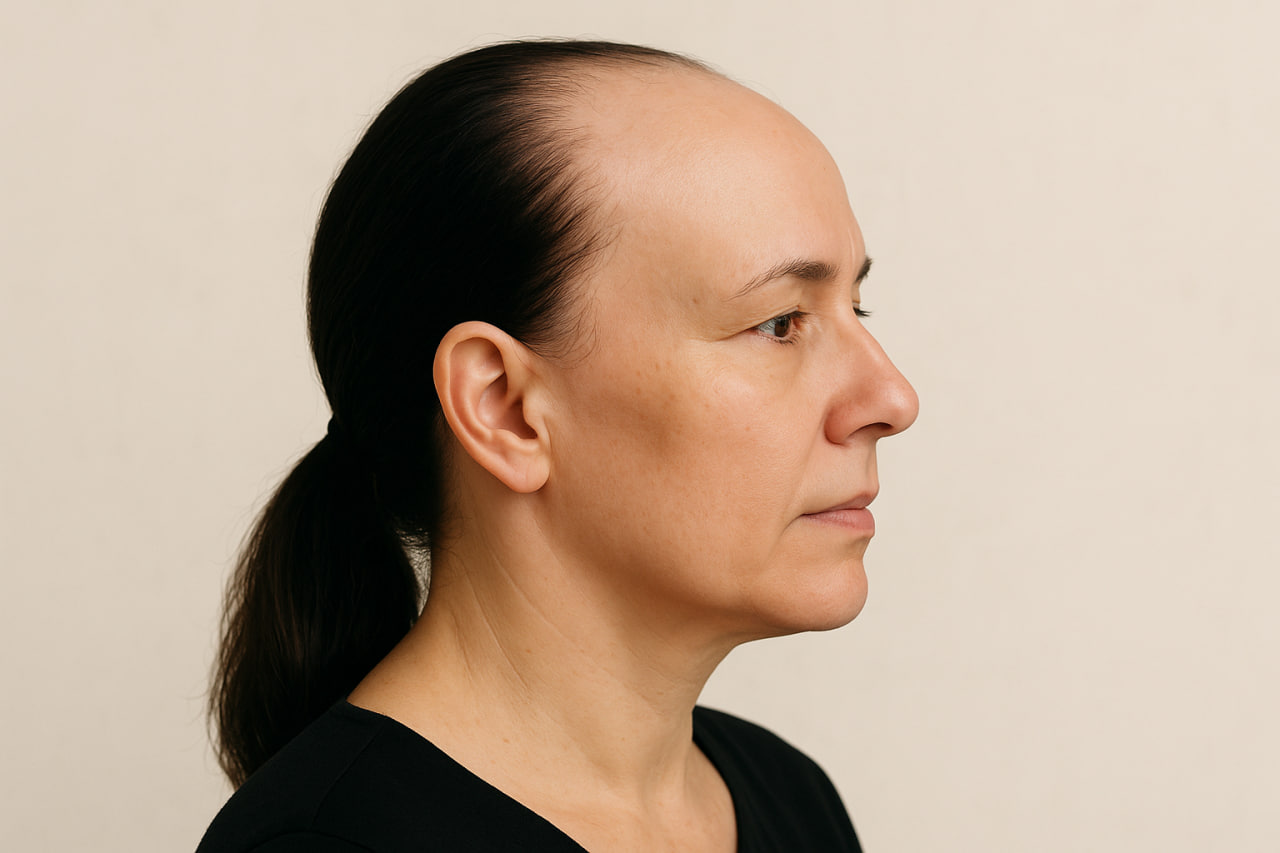
Frontal fibrosing alopecia con afectacion del arco frontal

Frontal fibrosing alopecia

It can affect the front, temples and sideburns. The Rocío model with extra lace sideburns is designed to cover that area.

Read more
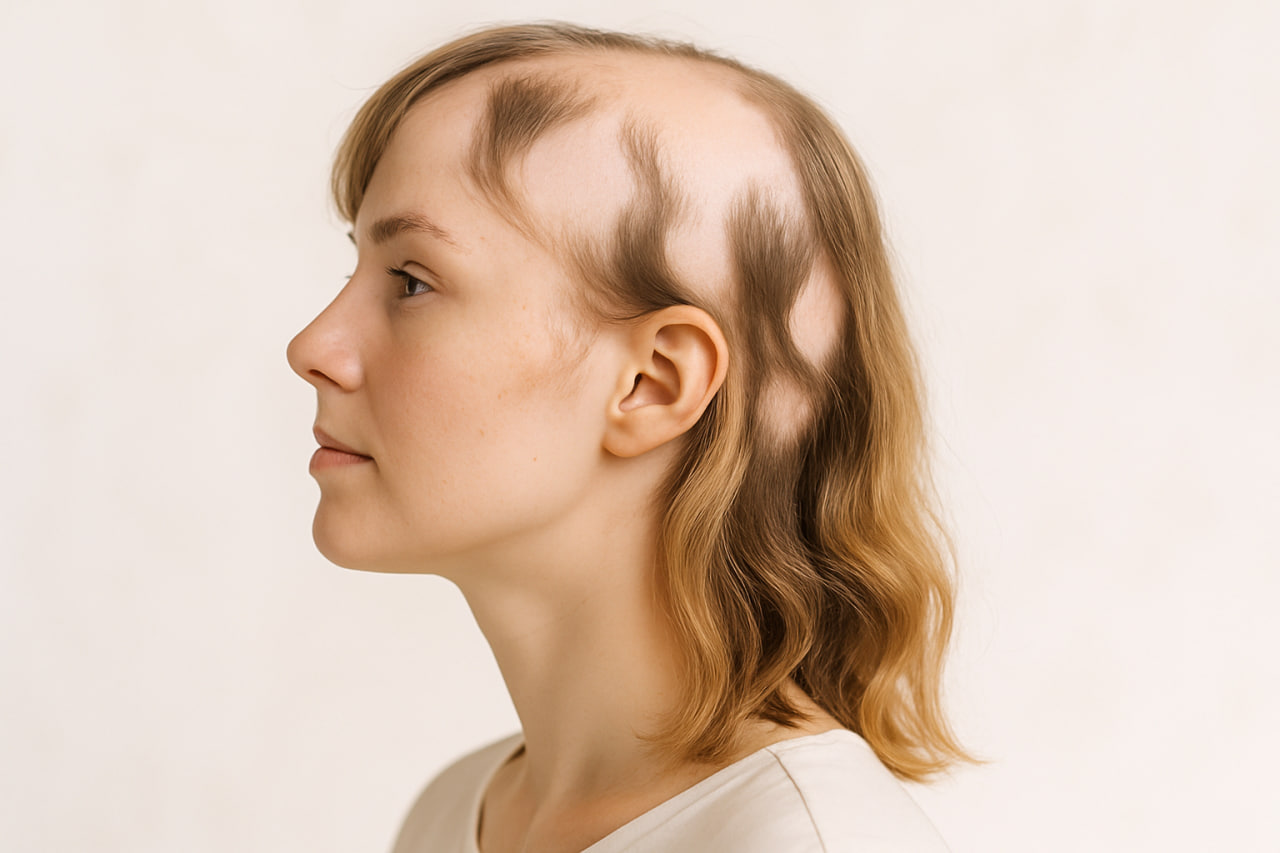
Alopecia areata con perdida de cabello por zonas

Alopecia areata

It can appear in patches. Depending on extent and location, it may be solved with a partial piece or may require another solution.

Read more
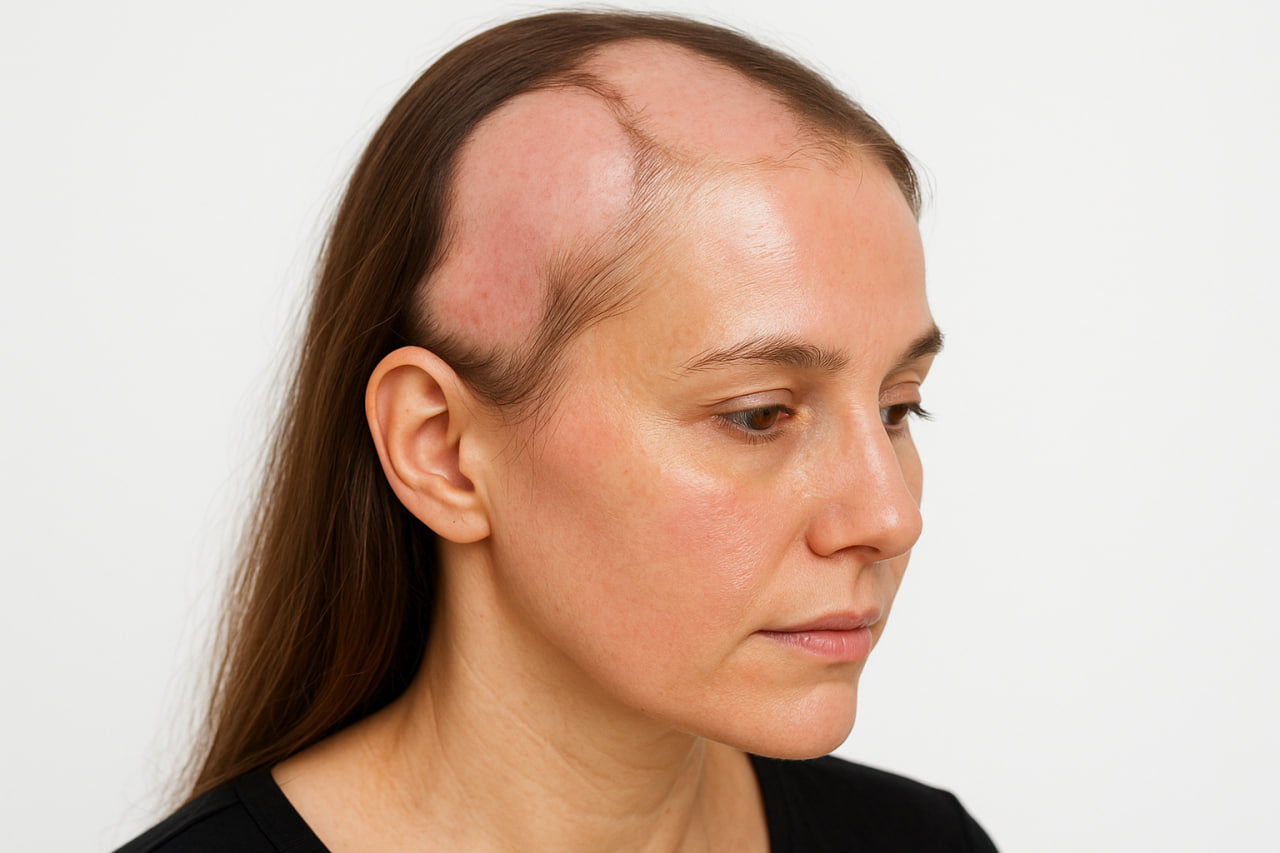
Scarring alopecia y solucion capilar personalizada

Scarring alopecia

When the affected area does not recover hair, it may require custom bases or specific attachment systems.

Read more
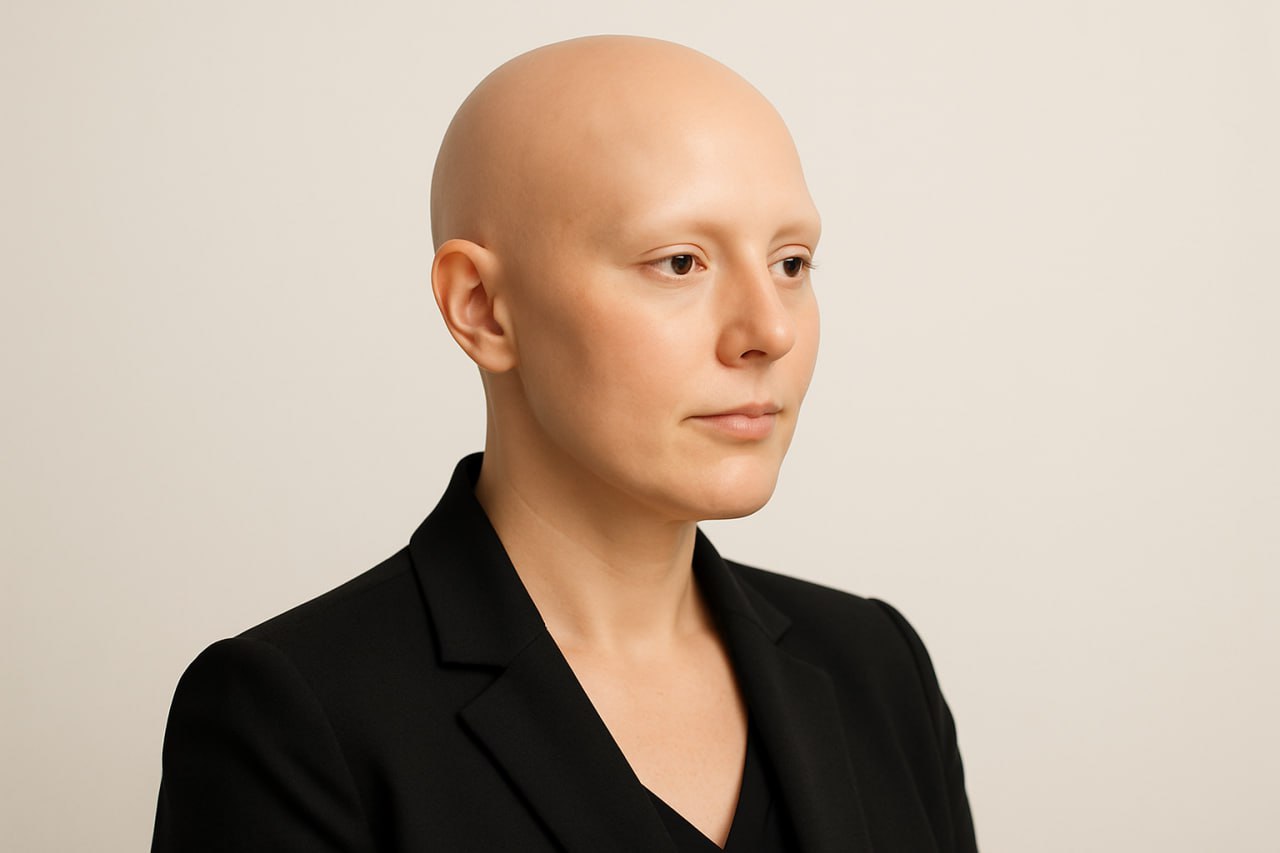
Alopecia universal o perdida extensa de cabello

Universal alopecia or extensive cases

If the loss is very extensive, it may be more realistic to assess a half wig, a skin prosthesis or a full wig.

Read more
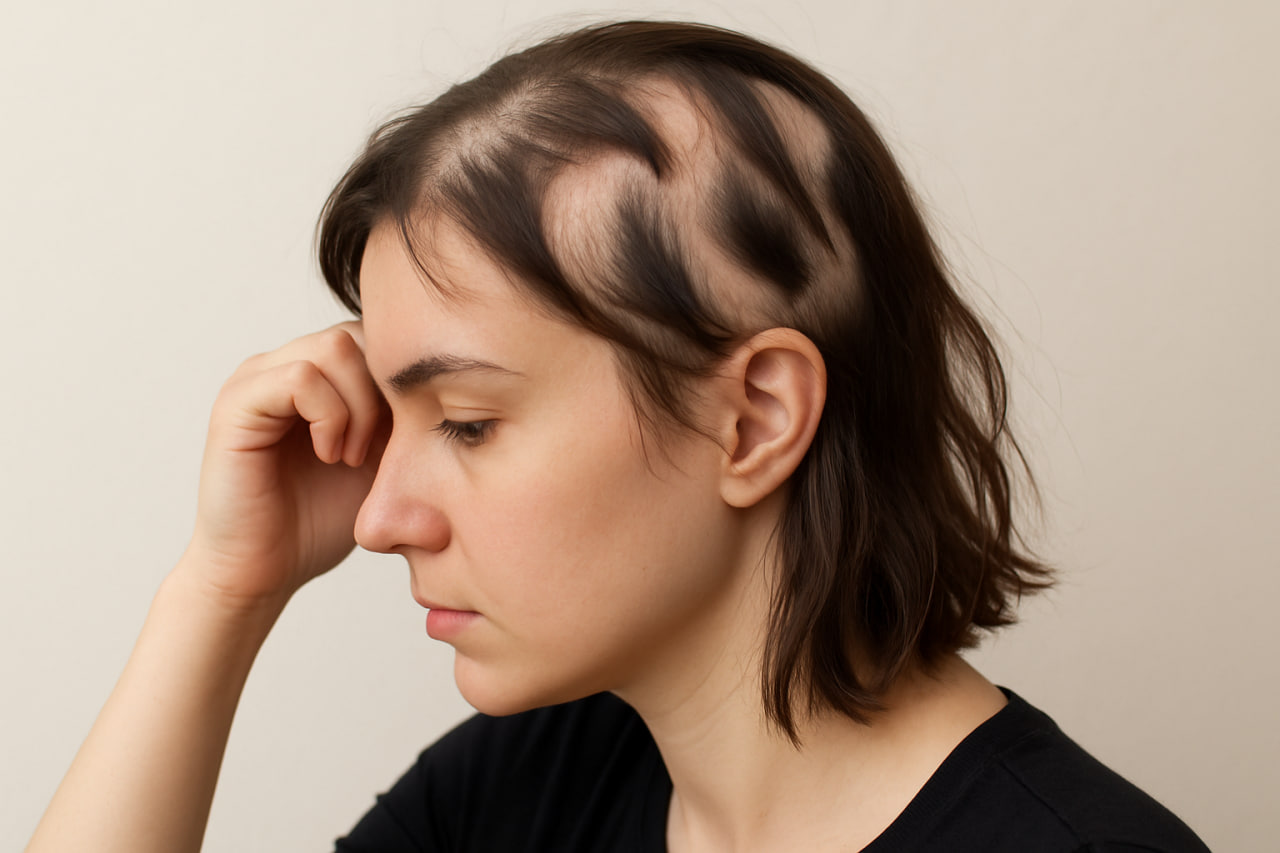
Trichotillomania y solucion capilar para perdida irregular de cabello

Trichotillomania

When loss appears in irregular areas, we assess whether a partial base can cover the area and allow a natural hairstyle.

Read more
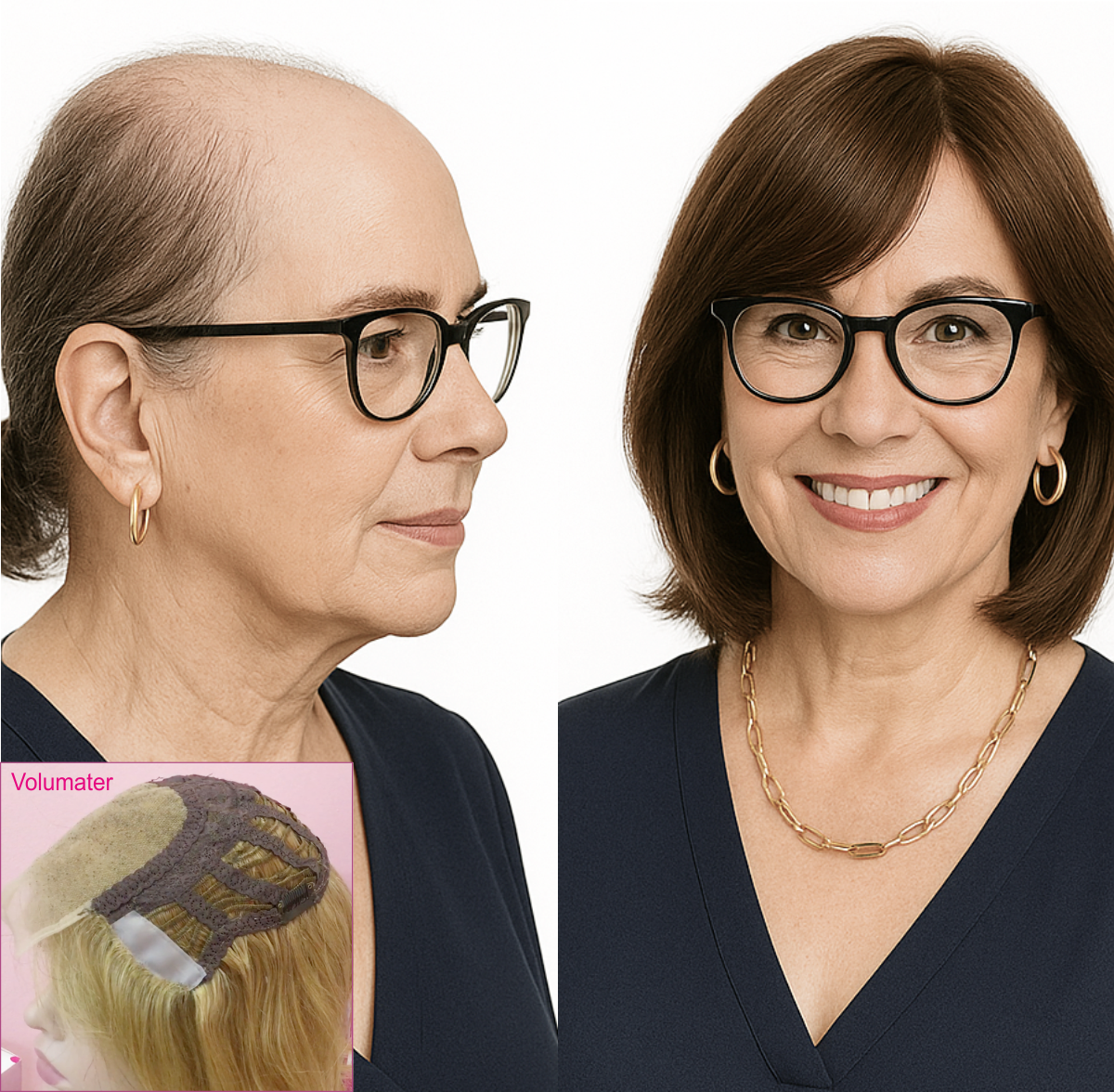
Media peluca Marlene cuando un voluminador sencillo no basta
When alopecia progresses

When a simple topper is not enough

If hair loss goes beyond the top area, it is worth assessing a broader solution before choosing a small piece. Sometimes a half wig, skin prosthesis or full wig offers a more natural and secure result.

View como lo valoramos

View models before deciding

The catalogue helps you recognise lengths, bases, volumes and styles. Afterwards we review with you which option makes sense for your real case.
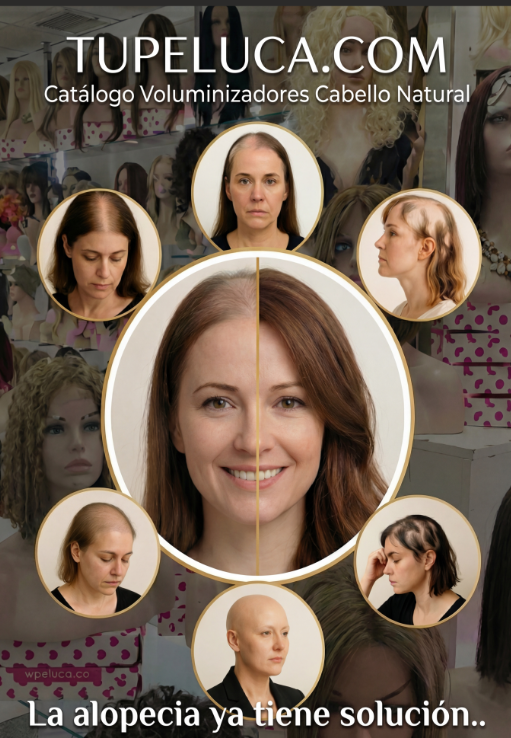
TuPeluca.com natural human hair topper catalogue
TuPeluca.com catalogue Natural human hair toppers

A visual reference to start recognising bases, lengths, styles and possibilities before sending us your case.

Frequently asked questions about hair toppers

Is a hair topper noticeable?
When the base, colour, density and cut are well chosen, the result can be very discreet because it integrates with your own hair.
Do I need to shave?
Normally not. The topper is placed over existing hair. Special preparation is only considered in specific cases and is always explained beforehand.
Are clips or adhesive better?
It depends on how much hair you still have and the affected area. If there is enough hair, clips are usually comfortable. If not, adhesive or a mixed system may be needed.
Why natural hair?
Because the topper blends with your real hair. If shine, feel or movement do not match, it is much more noticeable than on a full piece.
How do I know if I need a wig or a topper?
If you keep hair on the sides and back, and the lack of density is mainly on top, at the parting, front or crown, a topper may work. If the loss is very extensive, other solutions should be assessed.
Can I keep my usual hairstyle?
That is precisely the idea. We start from the way you really style your hair to choose base, parting, length, density and finish. We are not trying to change your style, but to recover volume where it is missing.
Does it work for frontal fibrosing alopecia?
Yes. We have a special model called Rocío, with extra lace sideburns, designed precisely to cover the area affected by frontal fibrosing alopecia when it advances over the frontal hairline, temples and sides. This is not a generic solution: the front shape, sideburns and base must be assessed so the piece covers exactly where it is needed.
What photos should I send?
Ideally, send a front photo, one from above, one of the area lacking density and an image of your usual hairstyle. With that we can guide you better before talking about specific models.
Paula explains frequent questions about alopecia and natural hair toppers on video

Paula explains frequent questions on video

Start directly in the specific alopecia and natural hair toppers introduction, without going through the generic entry.

Watch Paula's video

Would you like to know whether a topper can work for you?

Send us photos of the top area, front, sides and a reference for your usual hairstyle.